The Three Jars Method: Spend, Save, Give (And Why It Still Works)
A 30-year-old money lesson that still beats every app, spreadsheet, and budgeting system — and fits on a kid's bedroom shelf.
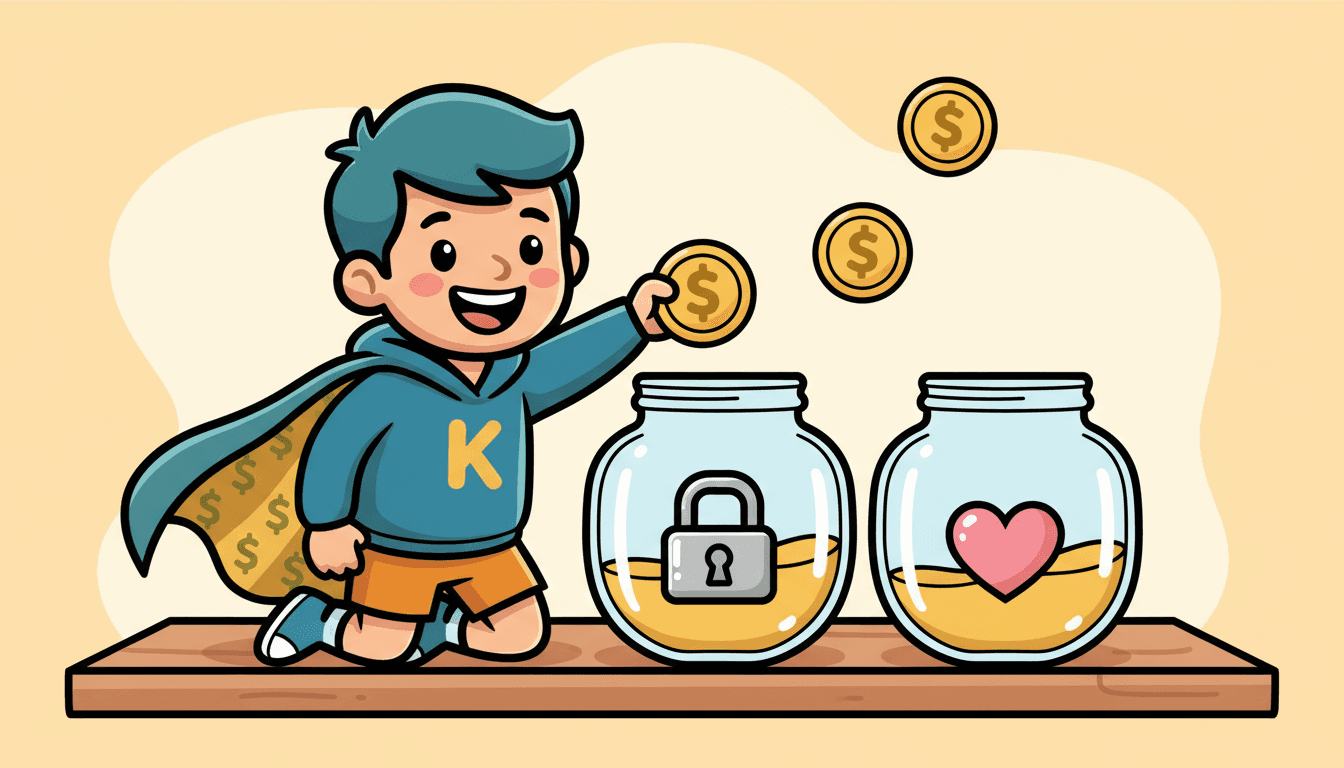
The three jars method is older than most of the apps trying to replace it. A kid earns or receives money, and it splits three ways: Spend, Save, Give. That's the whole system.
It's survived four decades of financial trends for one reason — it's simple enough that a five-year-old can use it and sophisticated enough that it's still the foundation of adult personal finance. Here's how to run it right.
1. Three Jars, Three Purposes
Label them clearly. The jars need different jobs or the method collapses.
- Spend: money for right now. Snacks, small toys, little choices. The kid has full control and gets to be impulsive with it.
- Save: money for a specific goal that's weeks or months away. A bigger toy, a trip, a concert ticket. The whole point is that it's not available for the impulse buy.
- Give: money for someone or something outside the family. A charity, a cause, a gift for a friend, a tip for a service worker.
The physical separation is the point. Three compartments in one wallet don't work as well as three actual containers. Kids under eight need the visual — they can see the Spend jar getting smaller and the Save jar getting fuller.
2. The Starting Ratio
The traditional ratio is one-third each. That's clean, easy to explain, and works fine.
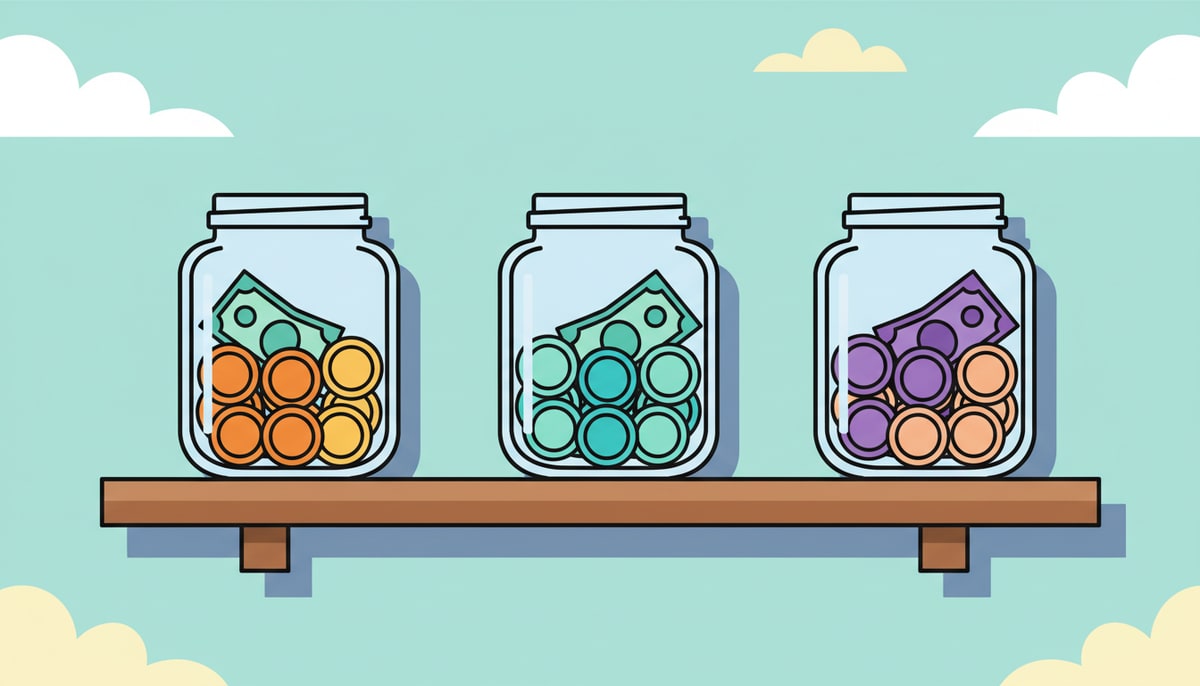
But for most kids, a better split is:
- 50% Spend — because they're kids, and a system that punishes spending is a system they'll abandon
- 40% Save — enough to actually reach goals
- 10% Give — small but non-zero, which is what makes it a habit
The give amount looks tiny, but at $5 a week, that's $26 a year to something they chose. Over a childhood, it's hundreds of dollars given intentionally. That's more than most adults give in a decade.
As kids get older and the dollar amounts get bigger, you can slide the ratio toward 40/40/20 or even 30/50/20. The direction matters more than the exact numbers.
🎵 Want a kid-friendly explainer of the three jars in song form? Our new single "Money Moves" from the KidCash All-Stars walks the Spend / Save / Give framework in 3 minutes flat. Earworm-on-purpose so the lesson sticks. Watch on YouTube →
3. Make the Goals Concrete
The save jar fails when there's nothing specific to save for. "Just saving" is not a motivation a kid can hold onto for three weeks.
Before the save jar gets its first dollar, pick a goal together. Write the target amount on the jar. Tape a picture to it. Every week, have the kid count what's in there and announce how much further they have to go. The reveal when they finally hit the number is the entire reward — make it a thing.
When that goal is reached, celebrate and start a new one. Don't let the save jar go dormant, because an empty jar with no purpose is just a drawer for spare change.
4. The Give Jar Needs Stakes
A give jar that only ever fills up and never gets emptied is not actually teaching giving. Set a rule: once a year, or once a quarter, the give jar gets emptied and sent somewhere specific.
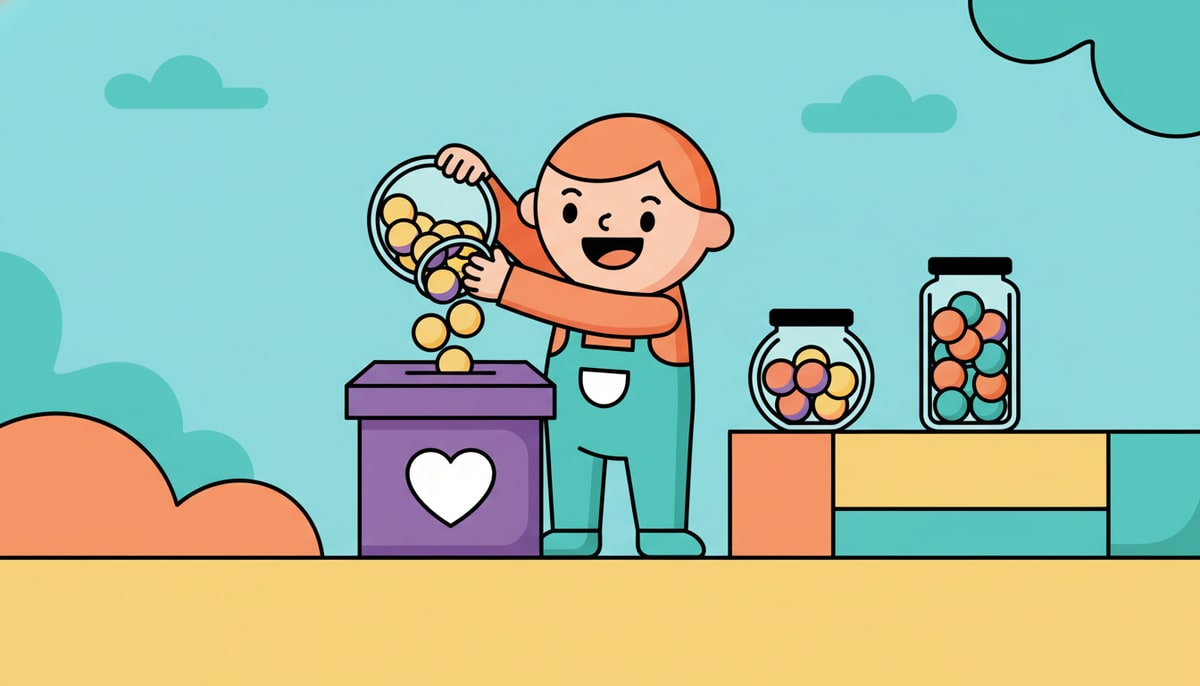
Let the kid pick the recipient. Their school, an animal shelter, a cause they heard about, a friend whose family is going through something. The child-led choice is what transforms giving from an obligation into an identity.
If they're too young to research, offer three options. "You have $18 in your give jar. Do you want it to go to the food bank, the dog shelter, or the hospital that took care of Grandma last year?" Three concrete choices, one real decision.
5. When to Switch to a Digital Version
Physical jars work perfectly for kids 5 to about 10. Past that, the amounts get bigger, deposits become less frequent, and the visual feedback of a jar filling up loses its charm.
That's the natural moment to switch to a digital equivalent — three tracked balances inside an app, three sub-accounts at a bank, or a dedicated parent-led tracking system. The key is that the three categories stay separate and visible. A single balance labeled "my money" is not the same system.
What you don't want is a kid graduating from three jars into a pile of undifferentiated cash in a checking account. That's the exact opposite of what the jars taught.
6. The Adult Version
The best argument for teaching this method is that most functional adult financial systems are just the jar method scaled up.
- A high-yield savings account is the save jar
- A checking account is the spend jar
- A donor-advised fund or monthly giving is the give jar
- A retirement account is a second, longer-term save jar
- An emergency fund is a spend jar that only unlocks during actual emergencies
A kid who runs three jars well for five years isn't learning a children's lesson. They're learning the exact mental model they'll use as an adult, just with nicer containers.
The Short Version
Label three containers. Split every incoming dollar. Pick a real save goal. Let the give jar make real donations. Celebrate what gets spent, what gets given, and especially what gets saved long enough to do something big.
That's the whole method. Forty years in, it still works because the lesson it teaches — that every dollar has a job before it arrives — is the lesson financially healthy adults actually run on.
Stay in the loop
We ship new free guides, printables, and the occasional deal — roughly twice a month. No spam, unsubscribe anytime.
Three streams available: 30-day welcome series, biweekly newsletter, and (opt-in) daily blog posts. Pick which you want after signing up. One click to unsubscribe from any.