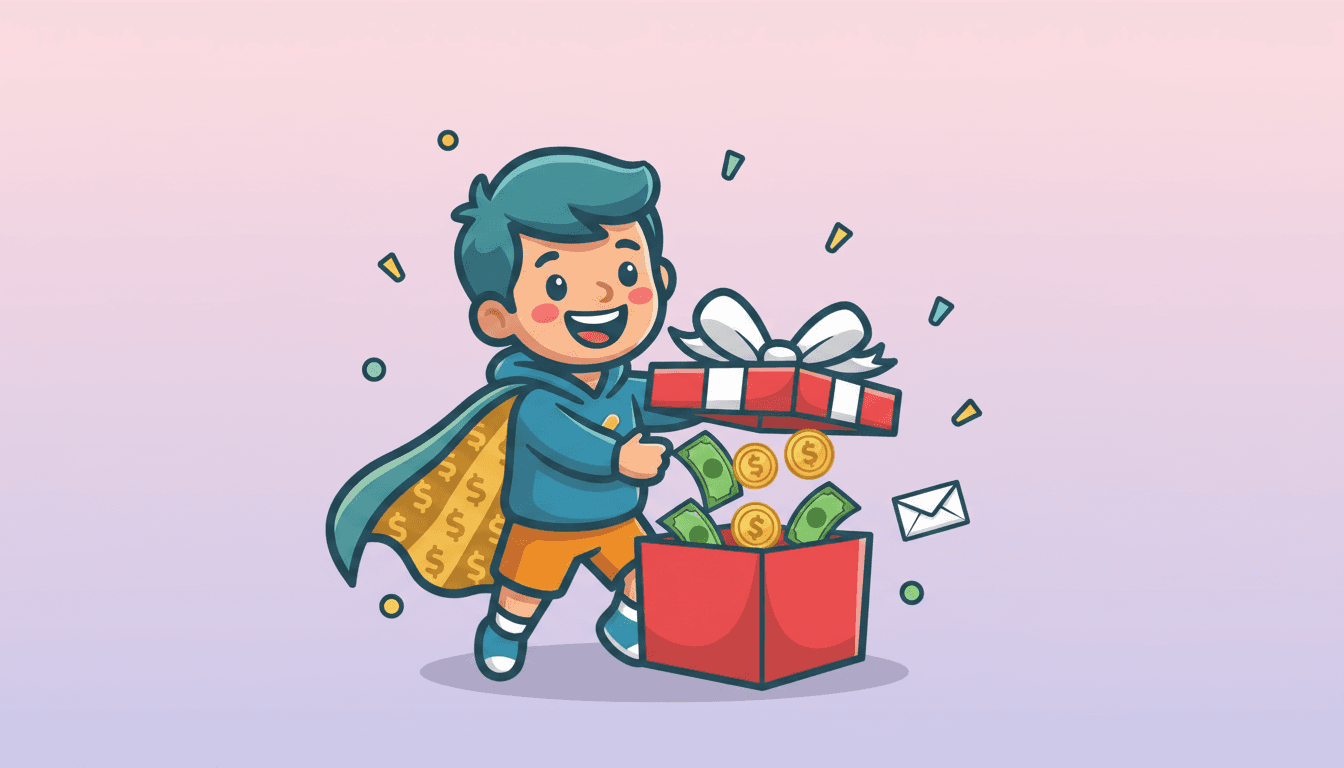
When Kids Get Gift Money: A Strategy for Birthday & Holiday Cash
Grandma just handed over a $50 check. Here's how to turn that moment into a lesson without taking the fun out of the gift.
Gift money is a specific kind of windfall. It's not earned, it's not expected, and it arrives with emotional strings attached — someone chose to give your kid cash instead of a toy. How you handle the first $50 check sets the pattern for every one that follows.
The wrong move in either direction is easy to make. Pocketing it all "for them" with no plan teaches kids that gift money is fake. Letting them spend every cent on candy at the gas station teaches them that big moments of money are for small moments of stuff.
Here's a middle path that works.
1. It's Their Money (Mostly)
Start from the honest position: Grandma gave it to your kid, not to you. Trying to secretly save it all for college will eventually backfire — either they'll find out and feel betrayed, or they'll grow up without ever learning how to handle a windfall.
They get agency over this money. That's the whole lesson.
But agency doesn't mean zero structure. That's the next part.
2. The Windfall Split
For any gift of $20 or more, use a simple split that takes 30 seconds to explain:
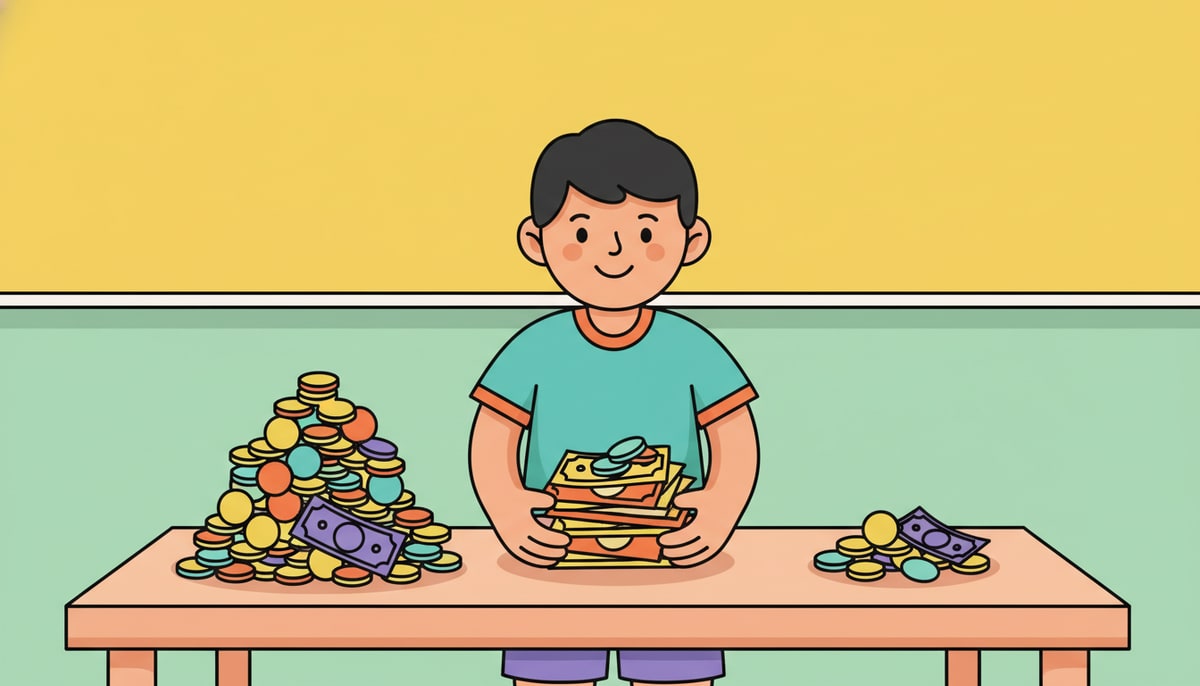
- Half goes to a goal — long-term savings, a specific thing they're saving for, or their investment account if they have one
- A quarter goes to give — a cause, a sibling's birthday fund, a charity they pick
- A quarter is theirs to spend — no questions, no guilt, no hovering
A $40 birthday check becomes $20 toward something they actually want, $10 for giving, $10 for whatever they feel like. The split is memorable because it's fractions they understand.
Smaller gifts — a $10 from a great-aunt — can go straight into the spend bucket. No need to ceremonialize every small amount.
3. The Thank-You Note Rule
Tie the split to a simple rule: before any of the money gets used, a thank-you note gets written. Not typed, not texted — written.
This isn't about manners theater. It's about slowing down the spend impulse long enough that the money stops feeling hot in their pocket. By the time the note is in the mail, they've had a day or two to think about what they actually want to do with the windfall — and a candy-bar impulse has usually passed.
4. Big Gifts Deserve a Bigger Conversation
When a single gift crosses $100 — a bat mitzvah, a milestone birthday, a graduation — the standard split isn't enough. Now there's enough money to do something real with it.
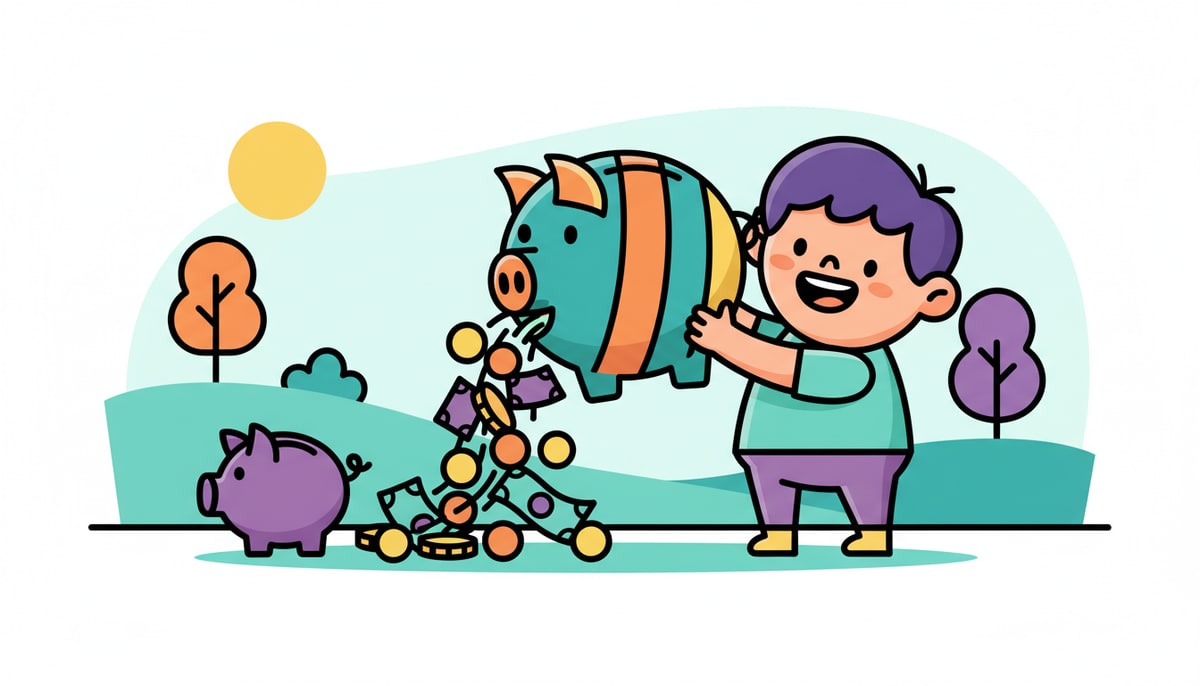
Sit down with your kid for 15 minutes. Walk through:
- What's a specific thing they could buy with the full amount?
- What's a goal the money could get them 10% closer to?
- What's an investment they could hold for 10 years?
They may still choose to spend most of it. That's fine — the conversation itself is the lesson. The kid who thinks through those three questions at 12 is the teen who doesn't blow their first paycheck at 17.
5. Don't "Borrow" Gift Money
This is the mistake that ruins everything else. A parent says "I'll just hold onto it for you" and then uses it for groceries, or for the kid's own school supplies, or just forgets it existed.
Gift money that disappears into a household account is the single fastest way to teach a kid that money isn't real and adults can't be trusted with it. If you take the cash, transfer the equivalent into their KidCash balance the same day. Better yet, let them deposit it themselves at the bank or cash it into their account on the app.
The Gift-Money Habit
Over a childhood, a kid will probably receive somewhere between $500 and $3,000 in cash gifts. That money, handled well, can either vanish into a series of impulse buys or become the foundation of their first investment account.
The goal isn't to control every dollar. The goal is to make sure the first windfalls of their life teach them the habit: some to save, some to give, some to enjoy. Scale that rule up, and it works for every bonus, tax refund, and lucky break they'll ever get as an adult.
Stay in the loop
We ship new free guides, printables, and the occasional deal — roughly twice a month. No spam, unsubscribe anytime.
Three streams available: 30-day welcome series, biweekly newsletter, and (opt-in) daily blog posts. Pick which you want after signing up. One click to unsubscribe from any.