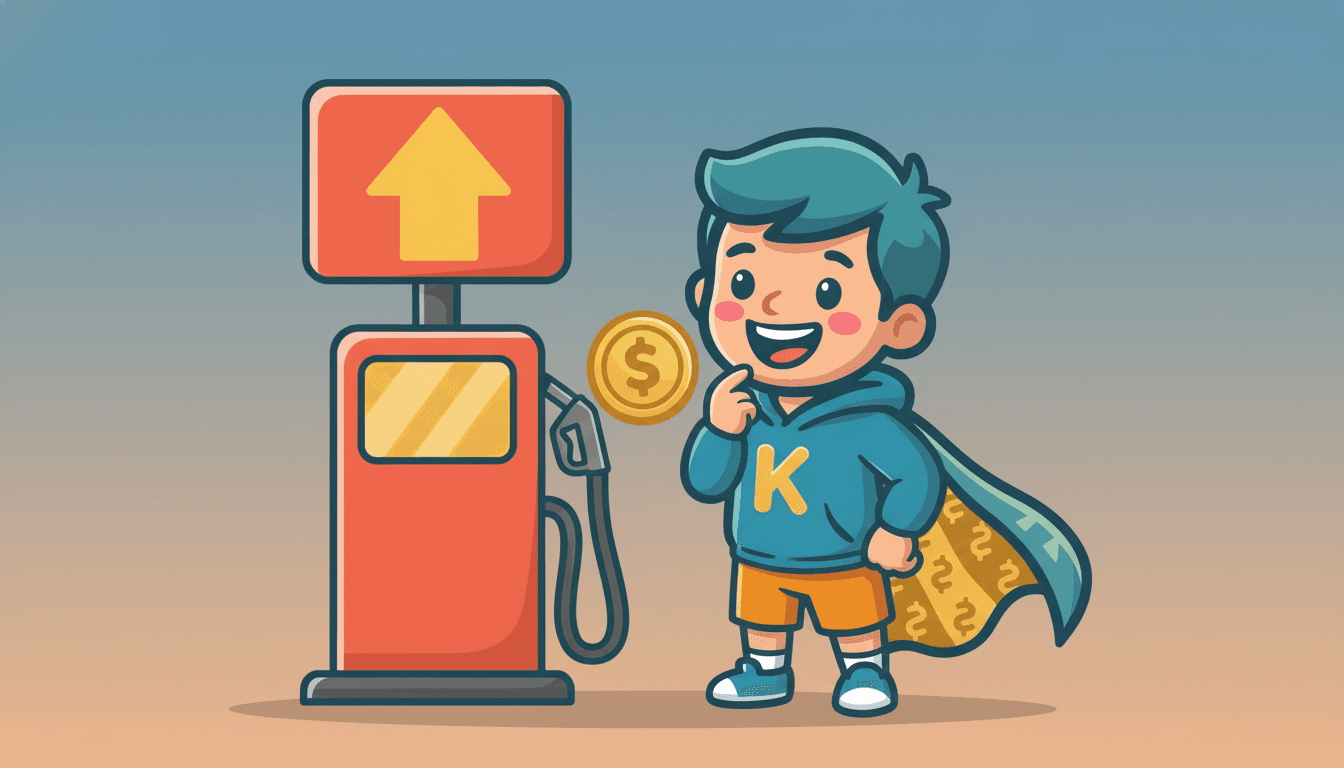
When Kids Hear You Sigh at the Pump
A new NY Fed report says gas prices hit lower-income families harder. Kids notice the sigh. Here's what to actually say when they ask why.
Inspired by: Surging gas prices are hitting lower-income households harder, New York Fed study shows (CNBC)
The New York Fed put out a report this week with a finding that's not surprising but is worth saying out loud: when gas prices spike, lower-income families feel it more — not just in dollar terms but as a percentage of what they have left at the end of the week.
If you've filled up a tank in the last month, you already know this. What's interesting is what your kid does with that information.
Kids notice the sigh
Children are the most attentive economists in your house. They don't read the Fed reports. They read your face at the pump.
A 6-year-old in the back seat sees you pull up to a gas station, sees the number on the pump, and registers the moment your shoulders drop. They don't yet have the vocabulary for "discretionary income" or "inelastic demand." But they have the feeling. And the feeling is: something just got harder for my parents.
The sigh is a money lesson. The question is whether you let it be a stress signal — or turn it into a real conversation.
What kids are actually asking when they ask "why is gas so expensive"
When a kid asks why gas costs more, they're rarely asking about supply and demand. They're asking one of three things:
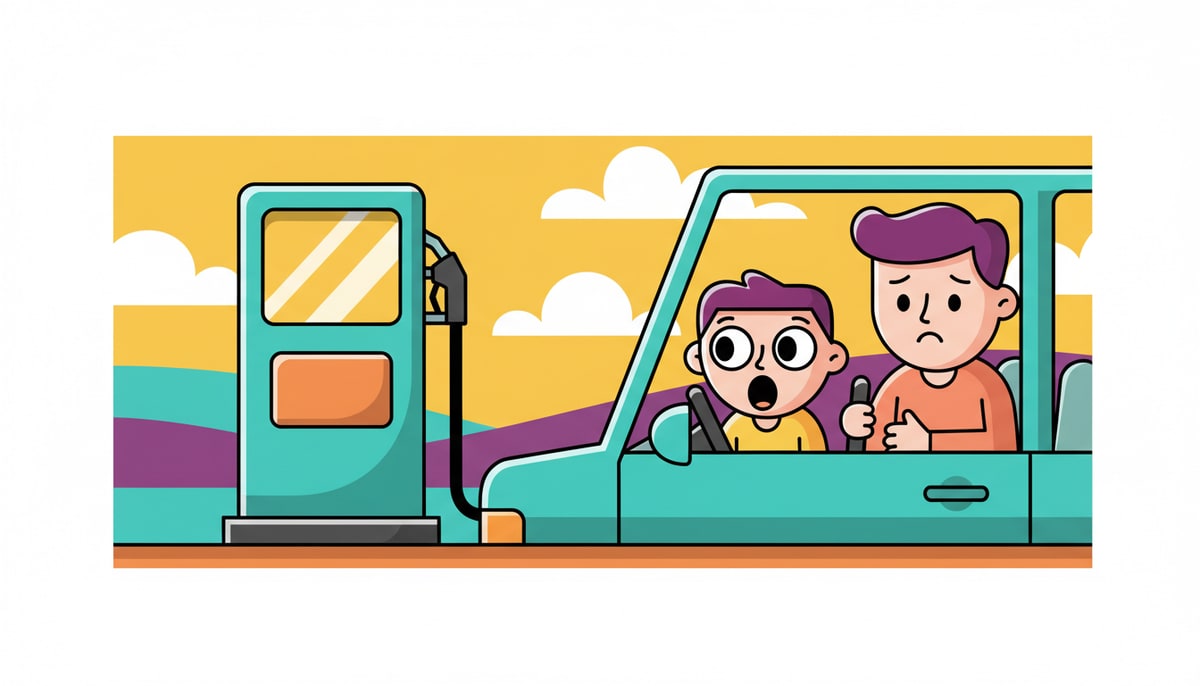
- Are we okay? This is the most common one for kids under 8. They want reassurance, not a lecture.
- Is this normal? Older kids — 9 to 12 — are starting to test their mental model of how the world works. They want to know if this is a thing that happens or a crisis.
- What does this mean for me? Teens. Always. The question behind the question is: am I still getting my allowance? are we still going to that thing?
The right answer depends on which question they're really asking. And you only know if you stop and ask.
A useful frame: it costs the same, but it doesn't
Here's a small thing that sticks with kids — the Fed report's actual finding, in kid language.
Two families fill up. Family A drives 200 miles a week. Family B drives 60 miles a week. Gas goes up by 50 cents a gallon. Both families pay the same per gallon. But Family A pays a lot more total — and a much bigger chunk of their week's money.
Same price. Different bill. That's the story of why the same price tag can be a shrug for one household and a stressful week for another. Kids get this immediately if you draw it on a napkin.
It also opens up the bigger lesson, which is that the sticker price isn't the same as the cost. Cost is what something takes out of your week. KidCash's whole thing is teaching kids to think in what's left — your balance after you spend, not the receipt amount.
The conversation we'd actually recommend
You don't need a scripted talk. Just don't waste the moment when it shows up.
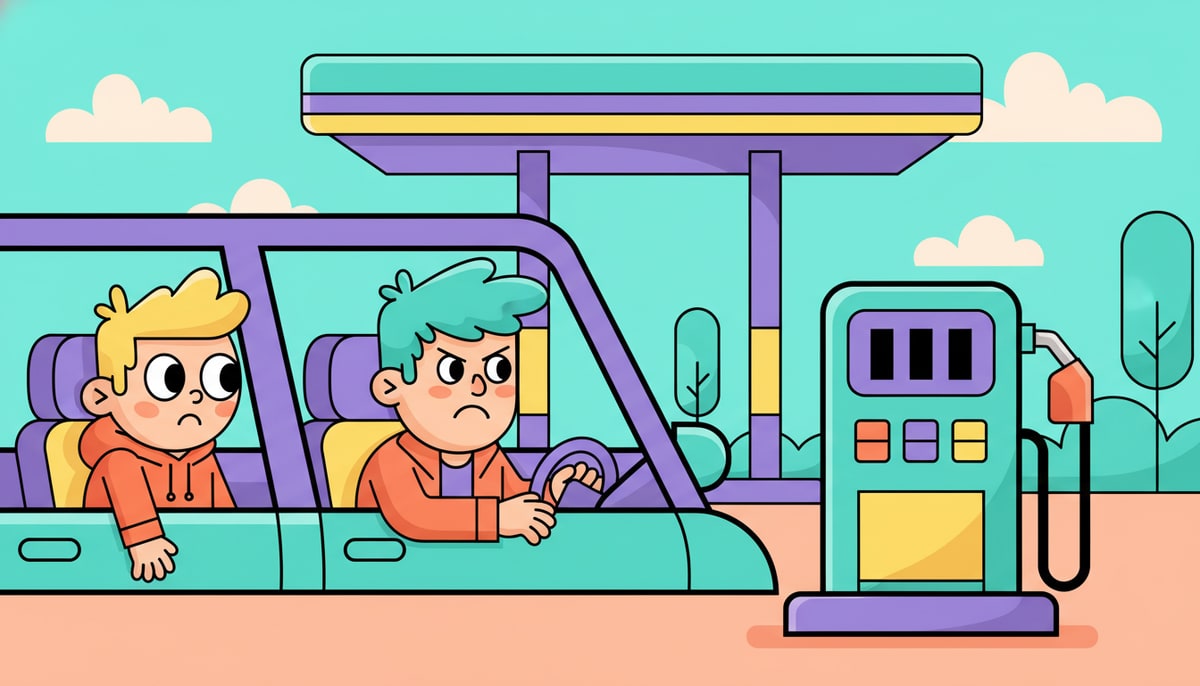
Next time you sigh at the pump, try saying out loud: "Yeah, gas is up again — that's going to make this week's grocery budget a little tighter, so we're going to skip [specific thing]." That's it. You've just modeled three things in one sentence:
- Cause and effect (gas up → grocery budget down)
- Tradeoffs (we trade [the thing] to absorb the price change)
- Honesty (you're not pretending nothing happened)
Compare that to "don't worry about it, kiddo." The first sentence makes a kid more confident. The second one makes them more anxious — they can tell something is up, you just won't say what.
P.S. — a small thing to do this week
Pick one trip you take regularly. Drive to school. The grocery run. Soccer practice. Sit down with your kid for two minutes and figure out, roughly, what that trip costs in gas. (Miles ÷ MPG × today's gas price. If your kid is old enough, let them do the math.) Then ask: if gas got 50 cents more expensive tomorrow, what would that trip cost? What about a year of that trip?
You're not raising a Fed economist. You're raising a kid who knows that prices touch real choices, that the world is a little more expensive for some families than others, and that the grown-ups in their life can talk about money without getting weird about it.
Those are the kids who grow up to handle their own money well. Whether or not they ever drive a car.
— The KidCash Team
Stay in the loop
We ship new free guides, printables, and the occasional deal — roughly twice a month. No spam, unsubscribe anytime.
Three streams available: 30-day welcome series, biweekly newsletter, and (opt-in) daily blog posts. Pick which you want after signing up. One click to unsubscribe from any.