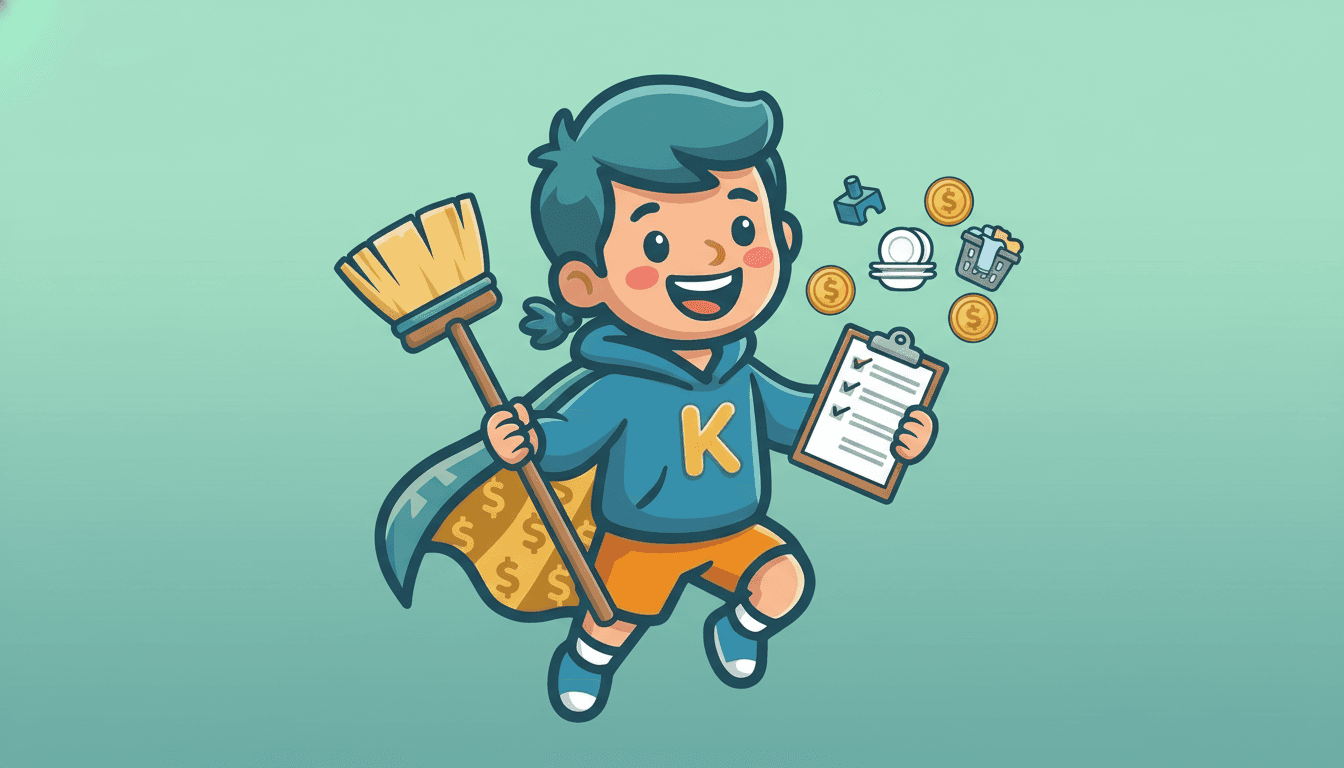
Age-Appropriate Chores That Actually Stick
A real list of chores kids will do — sorted by age — plus the system that turns one-off effort into a lasting habit.
Chore charts look great on Pinterest. Then by week three, they're covered in juice stains and nobody remembers whose turn it is to take out the recycling.
The problem usually isn't the kids. It's the system.
Why Most Chore Systems Die
Three quiet killers:
- Too many chores. Kids burn out. Parents can't track it.
- No feedback loop. A chore done on Tuesday feels the same as a chore skipped on Tuesday.
- Payday feels invisible. Allowance shows up regardless of effort.
Fix those three and the whole thing changes.
Ages 3-5: The "I Helped" Phase
Pick 2-3 tiny tasks. The point isn't the output — it's the identity of being a helper.
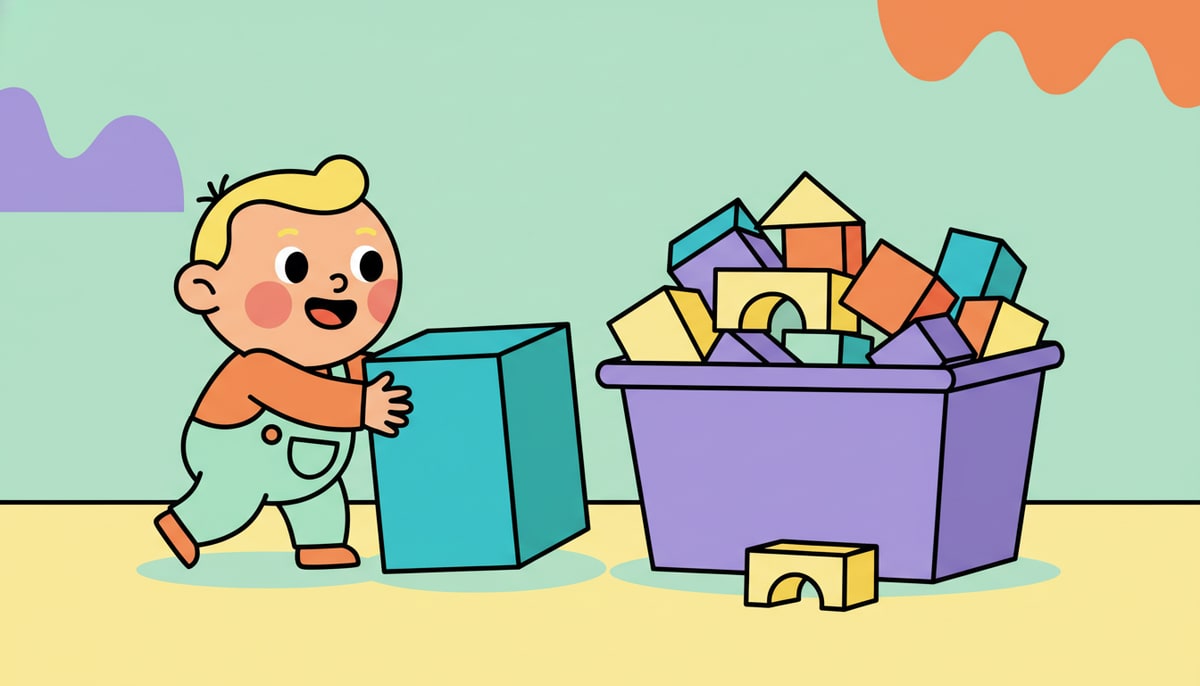
- Put toys back in the bin
- Carry their plate to the sink
- Help feed the dog or water a plant
- Put dirty clothes in the hamper
Keep values small ($0.25–$0.50). Celebrate every single completion out loud. Kids this age are working for the high-five, not the quarter.
Ages 6-8: The Routine Years
Now you can introduce expected chores (the things they do because they live here) alongside earning chores (the things they choose to do for money).
Expected (no pay):
- Make bed
- Put away their own laundry
- Clear their spot at the table
Earning ($0.50–$2.00 each):
- Empty small trash cans
- Sweep the kitchen
- Fold towels
- Wipe down the bathroom sink
This is the age where the checking/savings split starts to mean something. Give them a reason to want money they don't spend immediately.
Ages 9-12: Ownership Kicks In
Kids this age can own a chore — not just do it when asked. Try assigning one domain per kid.
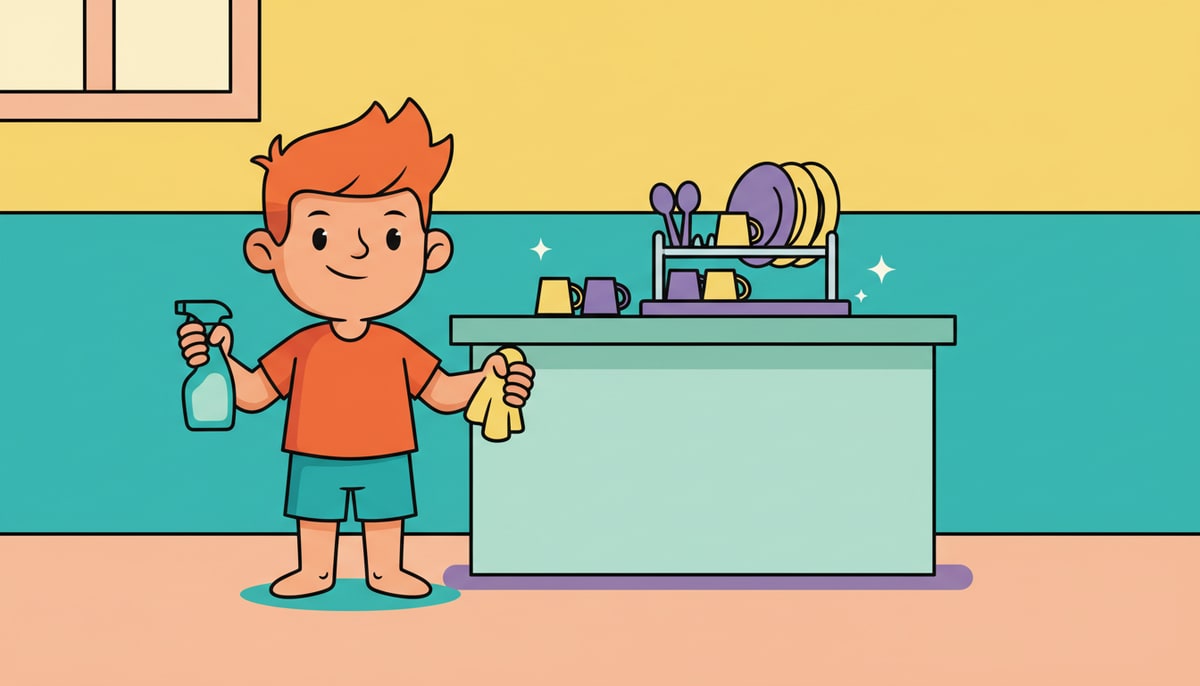
- "Dishwasher" — load after dinner, unload in the morning
- "Laundry helper" — sort, start a load, fold
- "Yard kid" — pull weeds, water, help mow
- "Car kid" — vacuum the back seat, wipe the dash
Set it to a recurring chore in KidCash with a fixed weekly payout. They see it on their dashboard, they check it off, money hits their balance. That loop — effort → visible reward → balance grows — is the whole game.
Ages 13+: Real Work, Real Money
By now, "pick up your socks" isn't going to motivate anyone. Pay for things that would otherwise cost you.
- Mow the lawn: $10–$15
- Deep clean a bathroom: $8–$10
- Babysit a younger sibling for an evening: $15–$25
- Wash and vacuum the car: $10–$15
This is practice for the real labor market. They negotiate. They do a bad job sometimes. They learn that quality affects repeat business.
The "Actually Sticks" Part
The chore itself is 20% of it. The system around it is 80%.
- One place to see everything. If the chore list lives in your head, it will die there.
- Same payday every week. Friday allowance processes whether you remember or not.
- Completion is visible. Checking off a chore should feel like something. Confetti, sound, a little ding — whatever it is, make it reward the moment.
- Talk about it once a month. What's working? What do they want to drop? What do they want to earn more for? Five minutes. Done.
If you want to skip the juice-stained Pinterest chart, that's what KidCash is for. Pick the chores, set the payouts, and the loop runs itself.
Stay in the loop
We ship new free guides, printables, and the occasional deal — roughly twice a month. No spam, unsubscribe anytime.
Three streams available: 30-day welcome series, biweekly newsletter, and (opt-in) daily blog posts. Pick which you want after signing up. One click to unsubscribe from any.