
Raising Generous Kids: Teaching Giving Without the Lecture
How to build giving into your kid's money habits so generosity becomes a default, not a one-time holiday gesture.
Most kids learn to save (someday). Some kids learn to spend (quickly). Far fewer kids learn to give — and the ones who do almost always had it built into the system from the start.
Giving doesn't happen by accident. Here's how to make it a default.
The Three-Jar Idea, Updated
The classic setup: three jars labeled Spend, Save, Give. Every dollar gets split.
It works. But physical jars have a problem — they only work if you have cash. Most families don't, most of the time.
Digital version: every time a kid earns, automatically route a slice into a "Give" bucket. 10% is a common starting point. When there's enough saved up, they pick where it goes.
Why 10% Matters (Even If It's Just a Dollar)
It's not about the amount. A 6-year-old giving $0.50 to the local animal shelter is doing the same cognitive work as an adult giving $500.
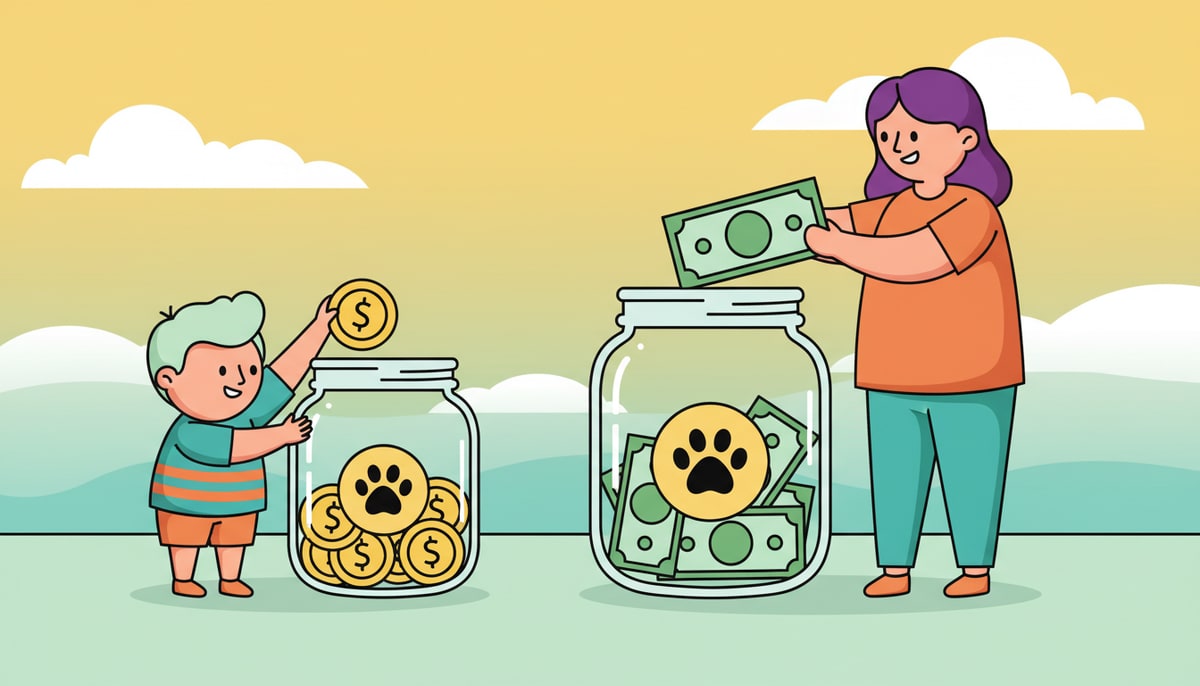
They had money. They chose to give some of it. It's gone now. That's the whole lesson.
Kids who do this once a month for a decade grow up as adults who, when a cause comes up, instinctively ask how much rather than whether.
Let Them Pick the Cause
This is the part most parents skip. Giving feels more like a chore when someone else picks where it goes.
Ask:
- What do you care about?
- Who do you think needs help?
- What would you want more of in the world?
First answers will be specific and funny ("more parks for dogs"). Take it seriously. Find the local dog park nonprofit. Let them give to it. The seriousness of your response teaches them that their values are real things in the world.
Older kids can research. Charity Navigator, local community foundation websites, or even just asking a teacher — "where does our school need money?" — all work.
Make the Giving a Moment
Don't just click donate and close the tab.
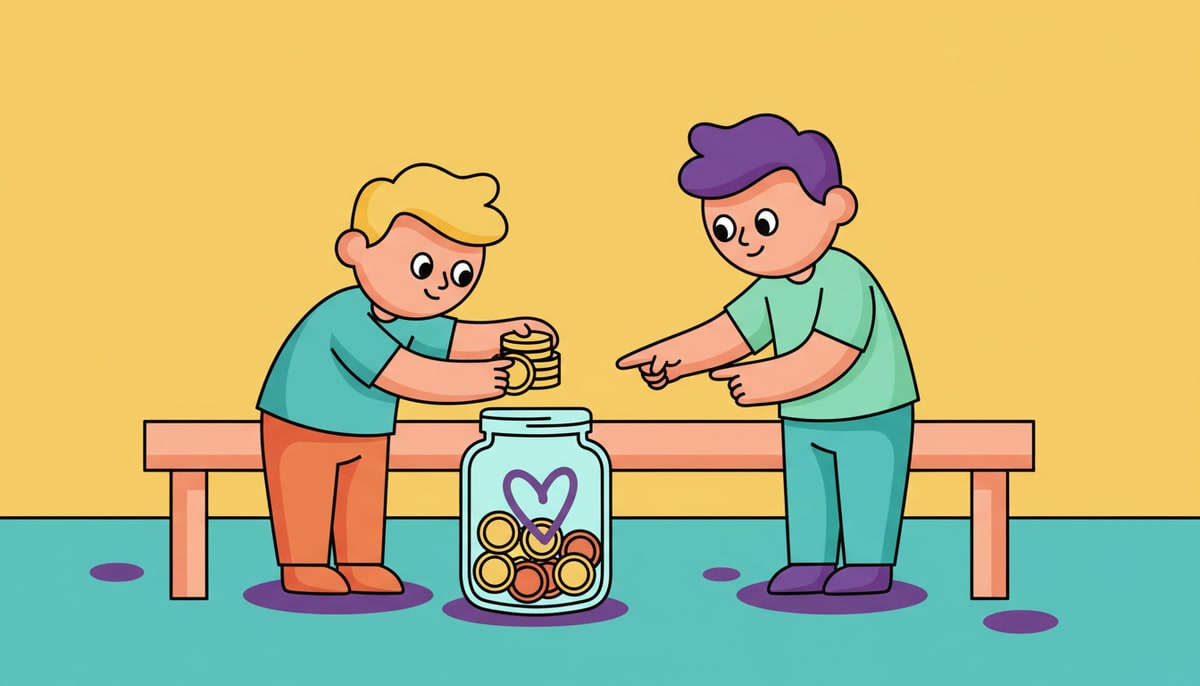
- Talk about what the money will do ("this might feed one dog for a week")
- If you can, print the receipt or confirmation and put it somewhere visible
- If possible, go there. Drop off a check, deliver food, plant a tree. The physical act sticks harder than the digital transaction.
Don't Turn It Into a Report Card
Giving can't be performative or it's not really giving. Skip these:
- Announcing it on social media
- Comparing siblings' giving amounts
- Praising the amount rather than the choice
Do this instead: treat it like a normal, quiet part of the month. Mention it the way you'd mention paying the electric bill. "We did the giving this month, your $3 went to the food bank. Nice one."
Understated is the whole move.
A Seasonal Rhythm Works
If monthly feels like too much, try the seasons. Four times a year, every kid empties their Give bucket. Pick a cause. Send the money. Done.
This also ties giving to life's natural transitions — start of school, holidays, spring cleaning, end of summer — which helps the habit survive kid phases.
The Long Payoff
Kids who grow up giving don't need to be convinced to give as adults. It's already who they are. Of all the money habits you can build early, this one probably has the highest return per dollar — and the return isn't in their account, it's in their character.
Stay in the loop
We ship new free guides, printables, and the occasional deal — roughly twice a month. No spam, unsubscribe anytime.
Three streams available: 30-day welcome series, biweekly newsletter, and (opt-in) daily blog posts. Pick which you want after signing up. One click to unsubscribe from any.