Wants vs. Needs: The Grocery Store Conversation
The aisle-by-aisle script parents can use to turn a normal trip to the store into a zero-effort money lesson.
You don't need a lesson plan to teach kids about money. You need a shopping trip.
The grocery store is the best classroom most parents already pay for. Here's how to actually use it.
Before You Leave the House
Pick one thing on the list and hand the decision to your kid. "We need cereal. You pick." That's it. They're in now.
If they're old enough, give them a rough budget for the thing they picked. "You've got $6. Pick whatever cereal you want, as long as it's under $6."
In the Aisle: The One Question
Every time something goes into the cart that wasn't on the list, ask:
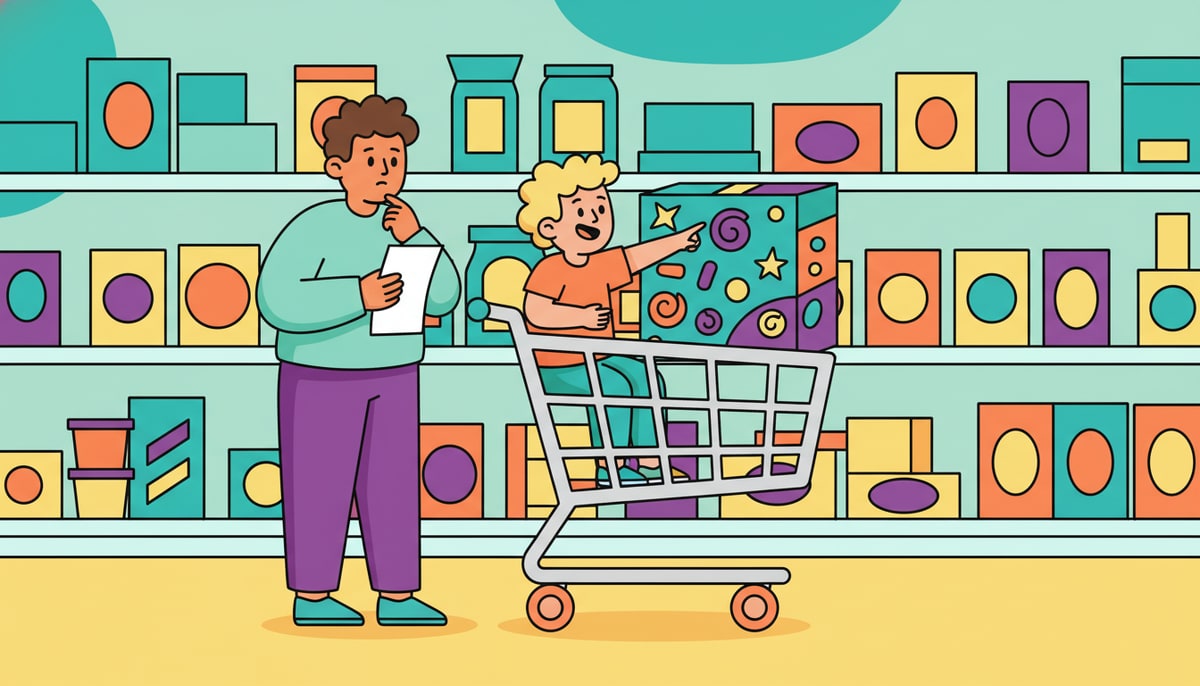
"Is that a want or a need?"
That's the whole framework. No lecture. Just the question. Over and over.
At first they'll say everything is a need ("I need those cookies"). Fine. Let them argue it. The arguing is the thinking. The thinking is the lesson.
Price per Unit: The Secret Weapon
The little unit price sticker on the shelf is free math class.
"This box is $4 but it's smaller. This one is $5 but twice as big. Which one is actually cheaper per ounce?"
A 7-year-old can do this. A 12-year-old can do it faster than you. Kids who do this a few times stop reaching for the first thing on the shelf.
The Cart Budget
Give your kid a running total in their head (or on your phone).
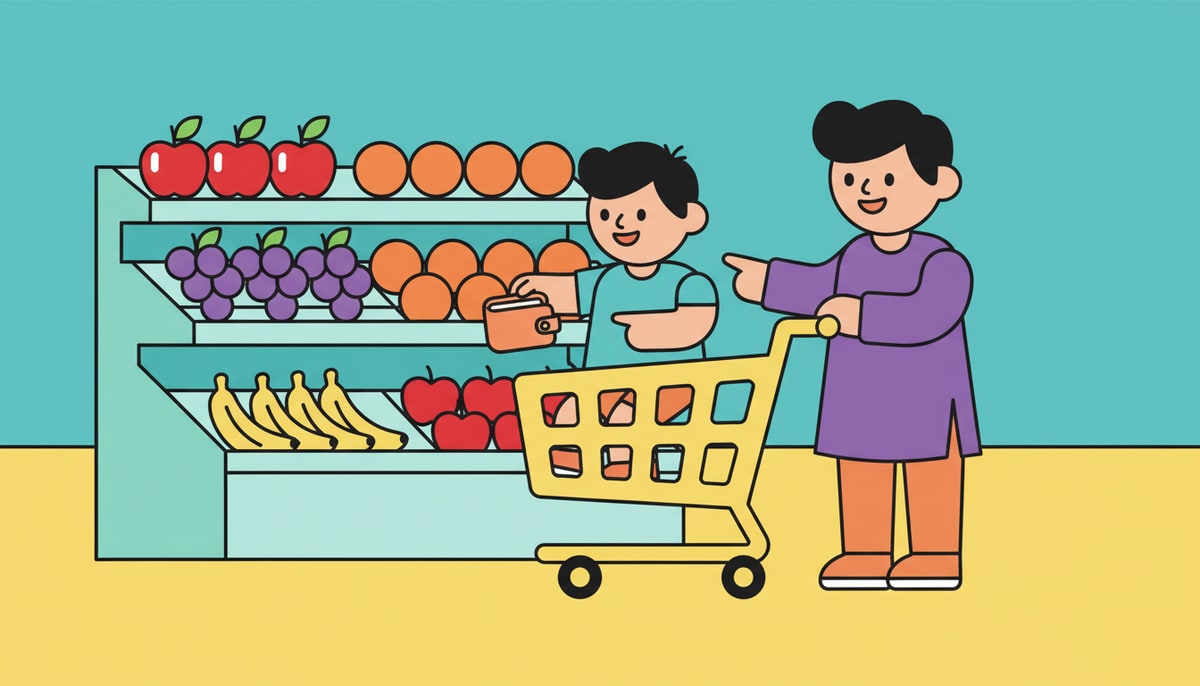
"We've spent about $40. We have $60 left. What else do we need?"
Suddenly the bag of chips is a tradeoff. If it goes in the cart, something else comes out. This is the actual experience of budgeting — not a worksheet.
The Checkout Moment
This is where most money lessons live or die.
When the total comes up, say it out loud. Not dramatically. Just matter-of-factly.
"$127.43. More than I expected today."
Then (important): don't just pay and leave. Ask your kid which item they think pushed the total up. Nine times out of ten, they'll guess wrong. Nine times out of ten, you'll be surprised too. That's the lesson — our instincts about cost are often wrong, and paying attention fixes that.
The KidCash Add-On
If you want to go one step further: let them pay for their one pick with their own money. Set up a kid balance, give them the cost to cover, and let them decide. If the $8 cereal is too much, they can trade down to the $4 store brand and keep the change.
Nothing teaches price sensitivity like spending your own money.
The Trap to Avoid
Don't turn every trip into a lecture. Kids tune out fast. Pick one question per trip ("want or need?") and leave it alone. The repetition over time is what sticks — not the intensity of any one conversation.
A year of small questions beats one big sit-down talk about money every time.
Stay in the loop
We ship new free guides, printables, and the occasional deal — roughly twice a month. No spam, unsubscribe anytime.
Three streams available: 30-day welcome series, biweekly newsletter, and (opt-in) daily blog posts. Pick which you want after signing up. One click to unsubscribe from any.